
Quick Answer
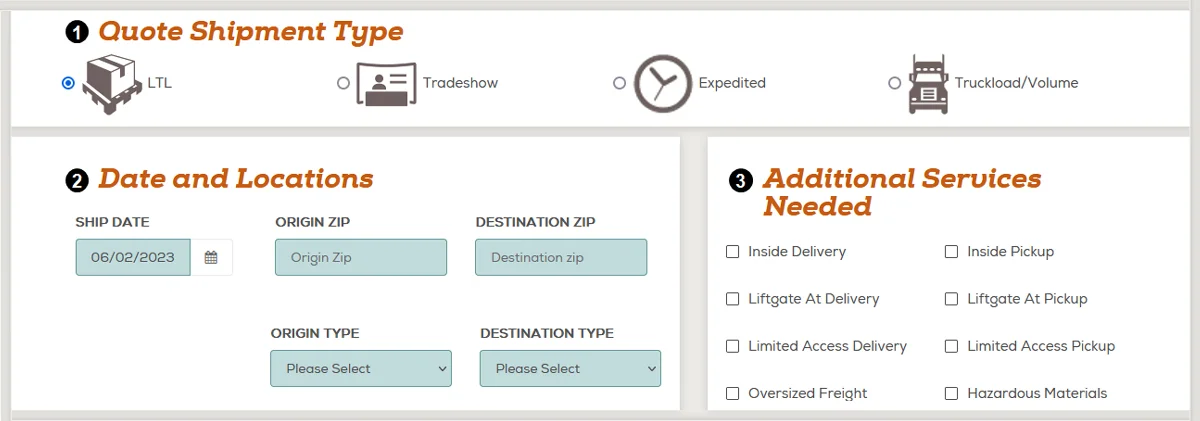
There is no single freight price. The quote depends on the lane, shipment size and weight, equipment, timing, loading conditions and current capacity.
Pickup, delivery, mileage, region and current truck availability affect the market.
Dimensions, weight, density, value and handling requirements influence the mode and equipment.
Urgent dedicated freight generally prices differently than flexible shared-capacity shipping.
The information that changes a freight quote
A freight rate is built around the actual shipment. The same 1,000-pound load can price very differently if one shipment is a compact pallet going dock-to-dock and the other is a long machine that requires side loading, a tarp and a strict delivery appointment.
The most important inputs are pickup and delivery locations, dimensions, weight, commodity, loading method, ready time, delivery requirements and equipment type. Access conditions can also matter: liftgates, residential locations, limited-access sites, inside delivery, detention, tarping, escorts or permits can change the final cost depending on the shipment.
Why distance is only part of the price
Mileage matters, but freight pricing is not simply miles multiplied by one permanent rate. Carrier availability, fuel, lane balance, seasonality, urgency and how easily the truck can find its next load all affect market pricing.
That is why generic online per-mile estimates should be treated as rough education, not a quote. For an actual shipment, compare the right modes using the real freight details. A few pallets may fit LTL shipping; an urgent compact shipment may fit a Sprinter van; larger dedicated freight may fit FTL; and unusual freight may need flatbed or heavy haul equipment.
How to get a more accurate quote the first time
Measure freight after it is packaged, not before. Include the pallet, crate, skid, protective frame or any part that adds to the shipping dimensions. Use an actual or reliable weight and send photos when the freight is unusual.
Also be clear about dates. “ASAP” and “must deliver by 8:00 AM tomorrow” are very different requirements. If timing is flexible, say so. If a plant shutdown or job-site deadline makes the load urgent, say that too. Better information gives Jason a better chance to match the shipment with the right service and avoid re-pricing later.
What to Send Jason
If you want help matching the shipment to the right equipment or service, send these details with your freight quote request:
- Pickup and delivery ZIP codes
- Commodity description
- Packaged dimensions
- Total weight
- Pallet or piece count
- Loading and unloading method
- Ready time and delivery deadline
- Special access, tarping, permits or appointment needs
- Photos when dimensions or loading are unusual
Do not guess the equipment if you are unsure
You do not need to know the trucking terminology before asking for a quote. Send the freight details and the options can be compared. That is usually safer than booking a truck by name and discovering at pickup that the load does not fit.
Frequently Asked Questions
Can I get a freight price with only the origin and destination?
You can sometimes get a rough idea, but an accurate quote normally requires dimensions, weight, commodity, equipment and timing details.
Why did my freight quote change after pickup details changed?
Changes to weight, dimensions, access, equipment, ready time or delivery requirements can change the carrier plan and price.
Is LTL always cheaper than full truckload?
No. LTL is often efficient for smaller palletized shipments, but larger, fragile, urgent or dense shipments may price better or move more reliably with partial or full truckload.
Does urgent freight cost more?
It can. Urgent freight may require dedicated equipment, immediate dispatch or tighter capacity, all of which can affect pricing.
