
Quick Answer
A 26-foot box truck can carry substantially more palletized freight than a cargo van, but the exact pallet count depends on the usable interior dimensions, pallet orientation, wheel wells or interior obstructions, whether the freight can be stacked and the truck’s payload rating. As a planning estimate, many shippers think in the range of roughly 10–12 common 48 × 40-inch pallets floor-loaded, but the assigned truck and loaded pallet dimensions must be confirmed before dispatch.
Pallet orientation changes how efficiently the box can be used. Overhang and nonstandard pallets reduce usable positions.
A truck can run out of legal payload before it runs out of floor. Dense freight must be checked by weight, not just pallet count.
Dock height, liftgate capacity, pallet-jack access and the delivery site can determine whether a box truck works operationally.
Use exact shipment measurements and loading details to match the freight to the right equipment.

Use exact shipment measurements and loading details to match the freight to the right equipment.
Use exact shipment measurements and loading details to match the freight to the right equipment.
Why a 26-foot box truck is not a fixed pallet formula
Commercial 26-foot box trucks are built by multiple manufacturers and body companies. Interior dimensions, rear-door clearance, liftgate equipment and payload can vary. For example, some rental fleets advertise a 26-foot body approximately 102 inches wide and 102 inches high with payload around 10,000 pounds, while also warning that actual specifications vary by vehicle.
That variation is why a freight quote should include exact pallet dimensions and total weight. A load of lightweight consumer goods may be limited by floor space, while dense metal components may reach payload limits with far fewer pallets.
How pallet orientation changes capacity
A 48 × 40-inch pallet can be turned in different directions, and mixed pallet sizes can create unused gaps. Loads that overhang the pallet or require space between pieces reduce the number of positions that fit.
If the freight can be double-stacked safely, cubic capacity may matter more than floor positions. If it cannot be stacked, every pallet needs its own footprint and the truck must be planned accordingly.
When to choose a box truck instead of LTL or a tractor trailer
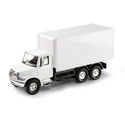
A dedicated box truck can make sense when the freight is too large for a cargo van, needs enclosed protection and benefits from direct service. It is also useful when a tractor trailer cannot access the pickup or delivery location.
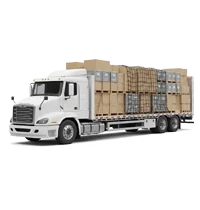
For larger pallet counts, heavier loads or dock-to-dock freight, LTL or a full-size dry van may be more economical. If there is no loading dock, a liftgate-equipped straight truck may be especially useful, provided the liftgate can safely handle the individual pallet weight.
What to Send Jason for This Shipment
You do not need to know the exact truck or trailer before requesting a quote. Send the shipment facts so the equipment can be matched to the freight:
- Number of pallets
- Loaded dimensions of every pallet
- Total shipment weight
- Whether freight can be stacked
- Pickup and delivery dock availability
- Liftgate and pallet-jack requirements
- Any residential, jobsite or limited-access locations
Planning Tip
Pallet count is only a starting point. The combination of floor space, payload and loading access determines whether a 26-foot box truck is the right choice.
Frequently Asked Questions
How many standard pallets usually fit in a 26-foot box truck?
A rough planning estimate is often around 10–12 common 48 × 40-inch pallets floor-loaded, but actual fit depends on the truck body, pallet orientation and shipment dimensions.
Can a box truck carry 10,000 pounds?
Some 26-foot box trucks are rated around that payload, but payload varies by chassis, body and installed equipment. Confirm the assigned vehicle.
Do all 26-foot trucks have liftgates?
No. Some do and some do not. Liftgate service should be requested when the pickup or delivery location cannot load at dock height.
Is a box truck the same as a dry van trailer?
No. A box or straight truck carries the cargo body on the same chassis as the cab. A dry van is a separate semitrailer pulled by a tractor.
