
Quick Answer
A box truck is a straight truck with the cargo body attached to the same chassis as the cab; a dry van is a separate enclosed semitrailer pulled by a tractor. Box trucks are useful for smaller loads, tight-access locations and liftgate deliveries. Dry vans are better when you need full trailer capacity for larger pallet counts or heavier commercial freight.
Smaller footprint, useful for local or regional dedicated freight and locations that benefit from liftgate service.
Full-size enclosed trailer capacity for larger palletized shipments and traditional FTL service.
Both protect freight from normal weather exposure and can move palletized commercial cargo.
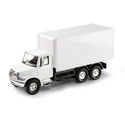
Use exact shipment measurements and loading details to match the freight to the right equipment.
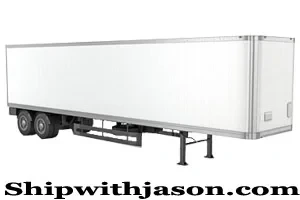
Use exact shipment measurements and loading details to match the freight to the right equipment.

Use exact shipment measurements and loading details to match the freight to the right equipment.
Capacity is the first major difference
A 26-foot box truck provides much less floor length than a standard semitrailer, but often more than enough for a mid-sized pallet shipment. The dry van is the normal choice when the load requires full truckload capacity or many pallet positions.
Payload also differs. Dense freight may exceed a straight truck’s legal payload even when there is unused floor space. Total shipment weight must be checked alongside pallet count.
Access can favor the box truck
A box truck is easier to maneuver at many urban, residential, jobsite and limited-access locations. Liftgate-equipped units can also handle pallets where there is no dock, provided the individual pallet weight is within the liftgate rating.
A tractor trailer typically performs best at facilities designed for commercial truck access and dock-height loading. When access is restricted, the shipper should confirm turning space, gate dimensions and loading arrangements before dispatch.
Use the shipment profile to choose
If the freight occupies only part of a 26-foot body and requires a liftgate, a straight truck may be the practical dedicated option. If the shipment is large, dense, dock-to-dock or needs the economy of full trailer capacity, a dry van may make more sense.
For smaller freight that can share trailer space, LTL may also be worth comparing. The right decision is between the shipment profile and the service requirements—not simply the largest truck available.
What to Send Jason for This Shipment
You do not need to know the exact truck or trailer before requesting a quote. Send the shipment facts so the equipment can be matched to the freight:
- Pallet count and loaded dimensions
- Total shipment weight
- Dock or liftgate requirements
- Pickup and delivery access
- Need for dedicated service
- Transit requirement
- Whether LTL is acceptable
Planning Tip
A 26-foot box truck can solve access and liftgate problems, but it should not be treated as a smaller dry van without checking payload and floor space.
Frequently Asked Questions
Is a box truck considered FTL?
A dedicated box truck can be booked as a full dedicated vehicle, but it is not the same equipment as a tractor-trailer dry van.
Which carries more pallets?
A standard dry van semitrailer provides far more floor space than a 26-foot box truck.
Which is better without a loading dock?
A liftgate-equipped box truck is often convenient for ground-level delivery, although other equipment and unloading methods can also be arranged.
Can a dry van have a liftgate?
Some specialized trailers can, but liftgates are much more commonly associated with straight trucks in general freight service.
