
Quick Answer
Transformer transportation must be planned from the exact unit, not just its kVA or MVA rating. Send the transport weight, dimensions, center of gravity, oil or fluid condition, lifting and tie-down points, manufacturer handling restrictions and site access details. Small dry-type units may move as conventional freight; large liquid-filled power transformers can require engineered heavy-haul planning.
Transformers can be extremely dense and top-heavy. Weight distribution affects axle planning and securement.
Oil-filled equipment requires clear communication about fluid type, quantity and transport preparation.
Substations and data centers may require cranes, scheduled outages, escorts, gate coordination or specialized unloading.
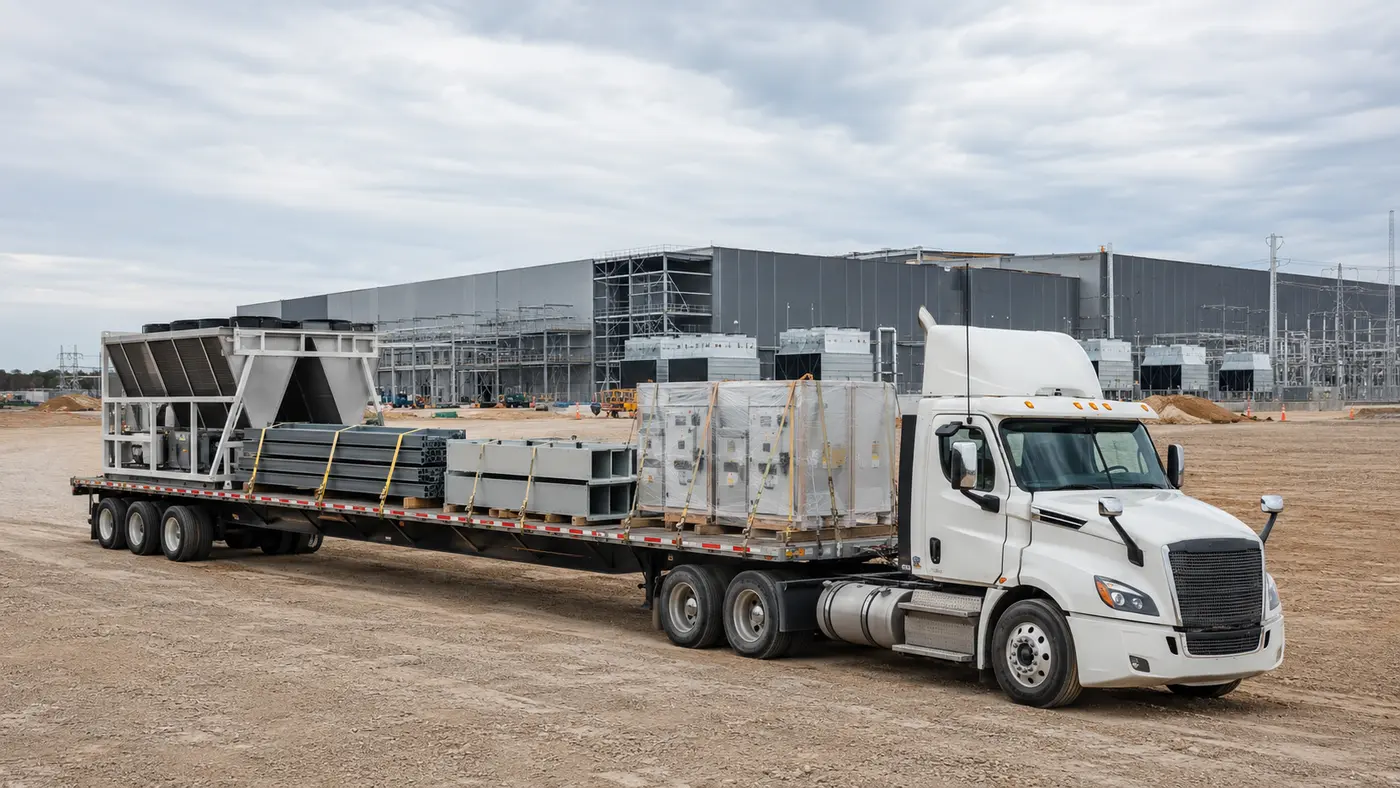
Use exact shipment measurements and loading details to match the freight to the right equipment.
Use exact shipment measurements and loading details to match the freight to the right equipment.

Use exact shipment measurements and loading details to match the freight to the right equipment.
Use the manufacturer transport configuration
Large transformers may ship with radiators, bushings, conservators or accessories removed. The transport dimensions and weight can therefore differ significantly from the fully assembled unit.
Provide a manufacturer drawing when available. It can show center of gravity, jacking pads, lifting points, tie-down locations and shipping dimensions that are essential for safe trailer and securement planning.
Equipment selection depends on scale
Smaller distribution or dry-type transformers can move on conventional enclosed or open-deck equipment when their dimensions and weight allow. Larger substation or power transformers may require step deck, RGN, multi-axle lowboy or other heavy-haul configurations.
The route may need to be evaluated for bridges, turning radii, overhead clearances and permitted axle loads. Oversize and overweight requirements vary by jurisdiction.
Protect sensitive electrical equipment
Transformer manufacturers may specify limits for tilt, shock or vibration and may require impact recorders or special blocking. Accessories should be labeled and secured so reassembly at the destination is straightforward.
If a transformer contains insulating oil or other regulated material, disclose it before quoting so documentation and carrier requirements can be addressed early.
What to Send Jason for This Shipment
You do not need to know the exact truck or trailer before requesting a quote. Send the shipment facts so the equipment can be matched to the freight:
- Manufacturer and model
- Transport weight and dimensions
- Center of gravity and shipping drawing
- Fluid type and quantity
- Removed accessories and separate pieces
- Lifting/tie-down points
- Origin and destination access
- Crane/unloading schedule
Planning Tip
For a large transformer, send the manufacturer shipping drawing with the quote request. It can save multiple rounds of questions and help identify the correct trailer sooner.
Frequently Asked Questions
Can transformers ship on a flatbed?
Smaller units can, while larger or taller transformers may require lower or specialized heavy-haul equipment.
Do oil-filled transformers need special planning?
Yes. Fluid condition and any applicable regulatory or carrier requirements should be disclosed before transport.
Why is center of gravity important?
It affects trailer loading, axle distribution, stability and securement planning.
Can a transformer be delivered directly to a data center?
Yes when site access, appointment, unloading equipment and project requirements are coordinated in advance.
