
Quick Answer
A step deck has an upper deck over the tractor area and a lower main deck behind it. The lower deck gives taller freight more vertical clearance than a standard flatbed before the overall loaded height reaches a route or state limit. Exact deck lengths and heights vary by trailer, so the shipper should provide the freight dimensions and loading method before assuming a step deck will solve a height problem.
The dropped main deck is the reason step decks are useful for taller machinery, crates and fabricated equipment.
Usable length is split between upper and lower decks. Long pieces need to be checked against the actual trailer layout.
A step deck creates more cargo clearance, but very tall freight can still require permits or a lower specialized trailer.
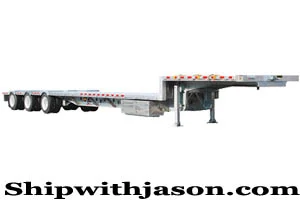
Use exact shipment measurements and loading details to match the freight to the right equipment.
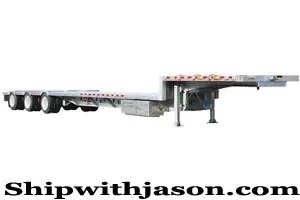
Use exact shipment measurements and loading details to match the freight to the right equipment.
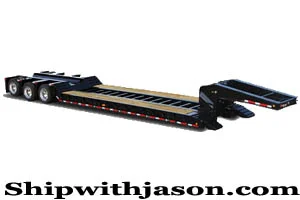
Use exact shipment measurements and loading details to match the freight to the right equipment.
Why step decks are used for tall freight
A standard flatbed carries freight on a deck that sits relatively high above the road. A step deck lowers most of the loading surface after the gooseneck, allowing taller cargo while keeping overall vehicle height lower.
This is especially useful for machinery, industrial skids, fabricated assemblies and crates that are too tall for a standard flatbed but do not require the extremely low deck or drive-on design of an RGN.
Do not assume all step decks have identical dimensions
Step decks come in different lengths, axle configurations and deck heights. Some have ramps; some are extendable; some are designed for heavier or longer freight. The upper deck also reduces the uninterrupted length available on the lower deck.
Send the cargo length, width, height and weight plus a photo or drawing. If the piece is long, identify whether any portion can safely sit across different deck levels or whether a flat continuous deck is required.
When to move from step deck to specialized equipment
If the freight is extremely tall, heavy or needs to be driven onto the trailer, an RGN, double drop or other specialized low-deck trailer may be more appropriate. Oversized dimensions may also require permits even when a step deck provides adequate physical clearance.
The right trailer should be chosen around total loaded dimensions, axle distribution, loading method and route—not simply because the cargo is described as “tall.”
What to Send Jason for This Shipment
You do not need to know the exact truck or trailer before requesting a quote. Send the shipment facts so the equipment can be matched to the freight:
- Cargo length, width, height and weight
- Whether the cargo can sit only on the lower deck
- Loading method and ramp requirement
- Center of gravity
- Any attachments that can be removed
- Origin and destination
- Whether the shipment may exceed legal dimensions
Planning Tip
A step deck is a height-management tool, not a universal oversize solution. Confirm the actual lower-deck dimensions before booking.
Frequently Asked Questions
Why is a step deck lower than a flatbed?
The trailer drops behind the upper deck, creating a lower main loading surface and more vertical cargo clearance.
Can a forklift load a step deck?
Often yes from the side, but the exact loading plan depends on the freight, site and trailer configuration.
Is a step deck the same as a double drop?
No. A double drop has an even lower center well between higher front and rear deck sections.
Can step deck freight still be oversized?
Yes. Width, height, length or weight can still require permits or specialized routing.
