
Quick Answer
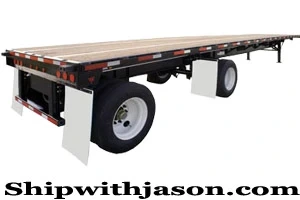
A standard flatbed is commonly around 48–53 feet long and about 8.5 feet wide, but exact deck length, deck height, axle configuration and legal payload vary. The federal width limit on the National Network is generally 102 inches (8.5 feet); cargo wider than that normally requires an overwidth permit. Cargo height is affected by deck height and state/route clearance rules, so tall freight should be evaluated before a truck is booked.
102 inches is the general federal commercial-vehicle width limit on the National Network; wider cargo generally requires permits.
There is no single federal CMV height limit. States set height rules, and route clearances can be lower.
Legal payload depends on tractor, trailer, axle configuration and jurisdiction—not just the trailer’s advertised capacity.
Use exact shipment measurements and loading details to match the freight to the right equipment.

Use exact shipment measurements and loading details to match the freight to the right equipment.
Use exact shipment measurements and loading details to match the freight to the right equipment.
Common flatbed dimensions are planning numbers, not guarantees
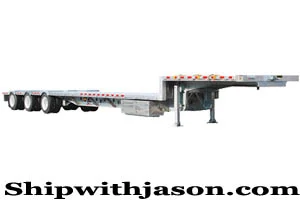
Many standard flatbeds are described as 48 or 53 feet long and approximately 102 inches wide. Deck height is typically higher than a step deck, which means a tall piece may exceed route height sooner even when its width and weight are ordinary.
Before quoting, send the exact cargo dimensions rather than relying on a generic trailer diagram. The assigned trailer can have differences in deck length, ramps, headache racks, dunnage, axle setup and usable space.
When width or height becomes oversized
Federal rules require states to allow 102-inch-wide commercial vehicles on the National Network, while overwidth cargo generally requires a permit. Height is different: states establish their own limits and routes can have lower bridges or utilities.
That means an 8-foot-wide machine may be straightforward while a 9-foot-wide machine triggers permit planning. A tall crate may fit on a step deck but not a standard flatbed without exceeding route height. For official background, see the FHWA federal size regulations.
Weight and securement must be planned together
The legal payload of a flatbed shipment depends on the complete combination and axle weights. Heavy pieces also need securement appropriate to the commodity and load.
FMCSA requires cargo to be immobilized or secured against movement, with additional commodity-specific rules for certain freight. Machinery and equipment should be reviewed for securement points, blocking, chains or straps, and whether accessories must be removed or separately secured.
What to Send Jason for This Shipment
You do not need to know the exact truck or trailer before requesting a quote. Send the shipment facts so the equipment can be matched to the freight:
- Overall length, width and height
- Weight of each piece and total weight
- Center of gravity if unusually heavy or tall
- Loading method and crane/forklift capacity
- Tarping or weather protection
- Securement points and loose attachments
- Origin, destination and route-sensitive dimensions
Planning Tip
If the freight is close to legal width or height, send the dimensions before requesting a standard flatbed. A step deck, RGN or permitted oversize move may be the better plan.
Frequently Asked Questions
How wide is a standard flatbed trailer?
A common planning width is about 102 inches, or 8.5 feet. The actual trailer and cargo must still be verified.
How long is a flatbed trailer?
Many are 48 or 53 feet long, but equipment varies.
What happens if my freight is wider than 8.5 feet?
It may require an overwidth permit and route planning, depending on the shipment and jurisdictions traveled.
Is there one federal legal height for trucks?
No. States set commercial-vehicle height limits, and specific route clearances can be lower.
